In Partnership WithSpikeball
Sign In
PRO Roundnet League · 2026 Season Player Honors

All-Stars

The players pick the All-Stars. Everyone who played a matchday this season gets a vote, and every pick is invited to the All-Star Game at the Playoffs.
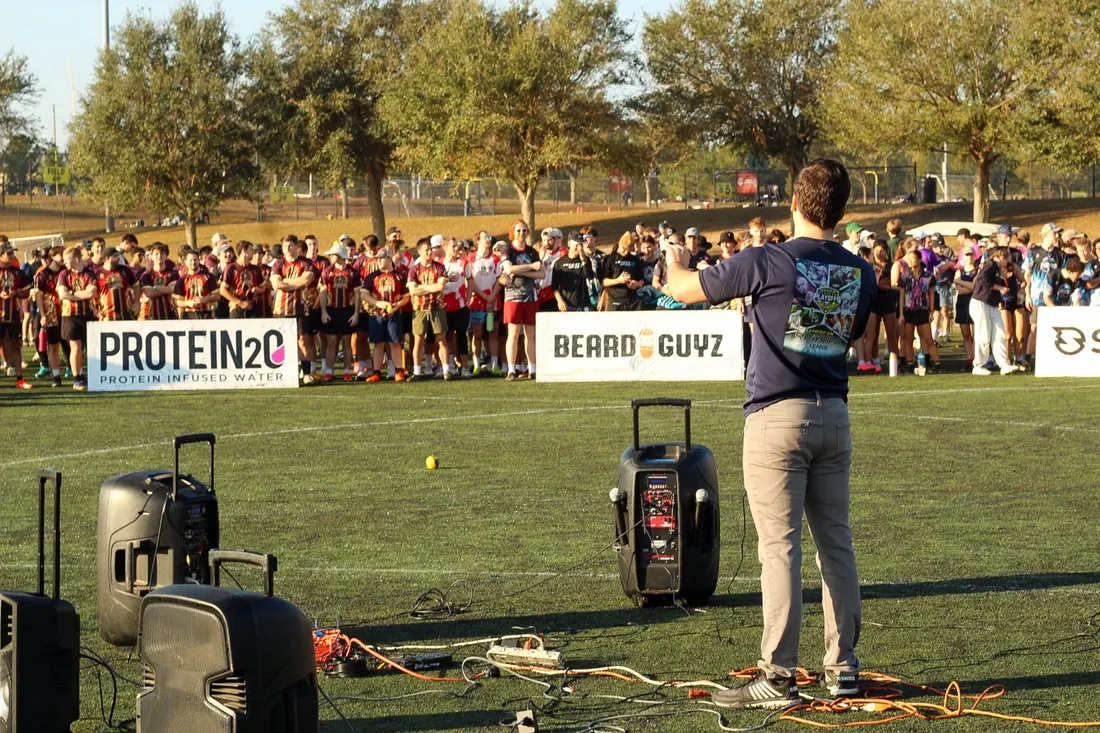
PRO League players gathered at a matchday
7 First Team picks per conference 7 Second Team picks per conference 7 Women’s First Team picks per group 7 Women’s Second Team picks per group 1 Club MVP at every club Dec 7, 2026 voting opens

The honors

What’s being picked

Club superlatives · picked at every club

No Minor All-Stars this year.

The ballot

How voting works

  1. Played a matchday? You’re in.Your ballot lands in your league account on Monday, December 7, 2026.
  2. Part 1: your club.Everyone in your club, ranked by season PER.Pick 1 teammate for Club MVP; that pick is required.Then the superlatives, one pick each, all optional:Most SpiritedMost ImprovedMost ReliableBest Defense
  3. Part 2: your conference, Pro.Pick up to 7 players from the other clubs in your conference.P1 and P2 share one Pro ballot, and your own club isn’t on it.Top 7 make the First Team, next 7 the Second Team.
  4. Part 2: Women’s.Pick up to 7 women in your group, West or East.Top 7 make the First Team, next 7 the Second Team.
  5. Your votes count where you played.Pro votes only come from players who played P1 or P2.Women’s votes only come from women who played.
  6. No voting for yourself.You can change your picks any time until voting closes.

The candidates

Who’s on the ballot

Tap any player for their full card, season record, PRO Score, PER, best partners, and the match blocks behind their year.

How you make the ballot

Pro ballot

Eligibility: Finish the season with a Pro-division PER of 40 or better and at least 6 counted Pro nets. Only P1 and P2 nets count toward the 6, and the PER that counts is your Pro-division line. Playing any division counts toward the matchdays you attended, and coaching a matchday counts as attending it.

Who’s on it: Players who attended both matchdays and players who attended just one are all on the ballot. Your card shows which.

The cap: each First Team and each Second Team can carry at most one player who attended a single matchday. That player makes the team on votes, in any of the seven spots, the cap is a limit, not a reserved seat, and no spot is guaranteed.

Honorable Mention: A single-matchday player who finishes in a team’s range past the cap comes off that team and is named an Honorable Mention, three per division.

The honor stands on its own: if a named All-Star does not come to the playoffs, the spot goes unfilled.

Women’s ballot

Eligibility: Play at least one match this season, in any division. There is no PER minimum.

Club MVP ballot

Eligibility: Play for your club this season. Every player in the club is on the list.

Conference

Texas, Pro

33 candidates

*PER: Player Efficiency Rating

Southwest, Pro

56 candidates

*PER: Player Efficiency Rating

Pacific Northwest, Pro

45 candidates

*PER: Player Efficiency Rating

Rocky Mountain, Pro

42 candidates

*PER: Player Efficiency Rating

North Central, Pro

41 candidates

*PER: Player Efficiency Rating

Southeast, Pro

37 candidates

*PER: Player Efficiency Rating

Northeast, Pro

80 candidates

*PER: Player Efficiency Rating

Eastern, Pro

66 candidates

*PER: Player Efficiency Rating

West, Women’s

58 candidates

*PER: Player Efficiency Rating

East, Women’s

7 candidates

*PER: Player Efficiency Rating

The ballot

A sample ballot

Sample

Rocky Mountain Conference · Pro, this is one Idaho Falls Freeze player’s ballot. Yours will show your club and your conference.

Part 1: your club (Idaho Falls Freeze)

Pick 1 teammate. Most votes wins Club MVP.

Sort
W–L14–5Season PER*W–L7–0Season PER*W–L12–7Season PER*

+ 33 more teammates on the full club ballot.

Club superlatives

Most SpiritedCamille Anderson
Most ImprovedCole Matas
Most ReliableSkipped
Best DefenseKody Price

Part 2: your conference, other clubs only

Pick your First Team: choose up to 7 players. The top 7 vote-getters are the First Team, and the next 7 are the Second Team.

Sort
W–L14–2Season PER*W–L15–5Season PER*W–L15–5Season PER*W–L15–5Season PER*W–L7–0Season PER*

+ 28 more players on the full conference ballot.

League history

Last Year’s All-Stars

The 2025 season’s picks, the first in league history.

Pro, 54 selections

Texas

  • Tyler Fernandez, Waco Bears
  • Garrett Ashton, Austin Bats
  • Alex Vilela, Houston Crusaders
  • Felipe Martinez, College Station Aggies
  • Luke Mowry, Dallas Lonestar

Pacific Northwest

  • Trey Thompson, Portland Riot
  • Solomon Berry, Seattle Rain
  • Eddy Leung, Vancouver Sentinels
  • Malachi Espinola, Washington Huskies
  • Erick Osthiemer, Kirkland Fog
  • Dustin Bishop, Ellensburg Breeze

Florida

  • Chase Meyer, Central Florida Snowbirds
  • Patricio Duran, Orlando Astronauts
  • Christian Hill, Miami Manatees
  • Gavin Sullivan, Polk County Swans
  • Benjamin Savage, Gainesville Gremlins, tied
  • Jared Beaufait, Gainesville Gremlins, tied

Northeast

  • Maxime Prince, Les Patriotes De Quebec
  • Alex Newton, Rochester Red Hots
  • Noah Lerner-Morelle, Albany Gladiators
  • George Reagan, Buffalo Bulls
  • Mathieu Lapointe, Montreal Royal Beavers

Midwest

  • Jack Wallace, South Denver Rams
  • Gibb Layton, Oklahoma Outlaws
  • Grant Laughlin, Denver Doughnuts
  • Jamisen Wrinkle, Kansas City Smokers

Arizona

  • Isaac Hill-Williams, Tempe Devils
  • Ian Scott, Flagstaff Lumberjacks
  • Kevin Reddell (Phoenix Lopes, GCU)

Southwest

  • Jake Woolley, San Luis Obispo Stampede
  • Connor Nelson, San Jose Shockwave
  • Rafi Moldovsky, San Francisco Bridges
  • Holden Frey, Pacific Rift
  • Josh Fragiacomo, LA Goats: roster spelling "Fragiocomo"
  • Michael Capobianco, Los Angeles Wave
  • Schon Siguenza, San Diego Breakers

East

  • Jacob Summers, Carolina Reapers
  • Sunny Gu, New York Subway Surfers
  • Gabriel Finocchi, Lemon Lads
  • Jake Hurst, State College Nittany Lions
  • Drew Ryder, Long Island Lookouts
  • Kurt Lannetti, Virginia Beach Surfs Up
  • Brian Perlson, Richmond Spin Doctors

Rocky Mountain

  • Xande Plaisted, Lehi Raptors
  • Harold Mancia, Idaho Falls Freeze
  • Konnor Cordingley, Pocatello Phantoms
  • Luke Tolpin, Boise Bandits
  • Luke Cook, Wasatch Warriors
  • Cole Matas, Montana Moose Riders

North Central

  • Bennett Anderson, Minneapolis Motion
  • Joey Reynolds, Illinois Inferno
  • Ethan Ferland, Milwaukee Milkers
  • Joren Rudzitis, St. Paul Sleepers
  • Ben Goldfarb, Chicago Beef
Women’s, 36 selections
  • (36, all selections) Erin Riley, Albany Gladiators
  • McKenna McKean, Athens Panic
  • Christina Nikas, Atlanta Puffins
  • Katherine Burnett, Austin Bats
  • Nicol Gahley, Boise Bandits Women
  • Maddie Huffstetler, Clemson Tigers
  • Yan Chung Cheung, College Station Aggies
  • Jessica Borgers, Denver Doughnuts
  • Mia McFall-Hubbard, Flagstaff Lumberjacks CH
  • Camille Anderson, Idaho Falls Freeze
  • Sadie Lauser, Kansas City Smokers
  • Kayla Fleming, Kirkland Fog Women
  • Anne Marie Gibbs, Lehi Raptors Women
  • Adele Lapointe-Roy, Les Patriotes De Quebec
  • Kellie Forand, Les Patriotes De Quebec
  • Ally Kachou, Los Angeles Wave Women
  • Rachel Luczak, Milwaukee Milkers
  • Melissa Feuerborn, Minneapolis Motion Women
  • Kara Klavins, Montana Moose Riders
  • Solene Manescau, Montreal Royal Beavers Women
  • Cailley Biagini, New York Sub Surfers
  • Kalin Morgan, Polk County Swans
  • Jordan Hemmen, Portland Riot
  • Lauren Viado, Richmond Spin Doctors
  • Abigail Norris, Rochester Red Hots Women
  • Stacey Grimes, San Diego Breakers Women
  • Elle Lowe, San Jose Shockwave
  • Alex Veron, San Luis Obispo Stampede
  • Anita Ho, Seattle Rain Women
  • Allison Kula, St. Paul Sleepers Women
  • Alaina Althouse, State College Nittany Lions
  • Lauren Patentreger, Tempe Devils
  • Rachel Cheung, Vancouver Sentinels Women
  • Haleigh Manske, Waco Bears
  • Maci Amussen, Wasatch Warriors Women
  • Hathaway Bush, Washington Huskies Women

The numbers on the ballot

PRO Score

The league’s career rating, from 1 to 10, and it never resets. It is built from every counted game a player has played in the league, their full body of work, and every player in the league sits on the same ladder. The higher the number, the stronger the player.

Season PER*

PER*, Player Efficiency Rating, is current form this season, built match by match into one grade for the season. Every match starts at 50, league average, and the season number grades you against your own competition: win your nets and the number climbs toward 99 on how much you won by, the points you scored, and how strong the pair across the net was. Winning big stops paying at 10, and the 90s only open up against the best pairs. One matchday on its own carries a Matchday Grade instead, the same grading for a single day.

The full walk-throughs: PER and PRO Score in the FAQ.

Questions Answered

The key questions for this page. The full league FAQ, all 287 answers, lives on one page.

What is the PRO Roundnet League?

The PRO Roundnet League is a national club-based roundnet league featuring P1, P2, M1, M2, and Women's divisions. Clubs compete throughout the season for standings, playoff qualification, promotion, relegation, and championships. The league is built to create long-term club identity, structured competition, regional growth, and advancement pathways from beginner levels to the highest level of play. The season includes three official matchdays followed by championship playoffs in Orlando, Florida.

How does the season work?

The season includes three primary matchdays:

  • Matchday 1: Super Regionals (Las Vegas & Richmond)
  • Matchday 2, Local Conference Competition
  • Matchday 3: Orlando Season Finale. Championship playoff brackets begin Friday evening after Matchday 3 and conclude Saturday.
How are standings calculated?

League standings use a group point system:

  • Win = 3 points
  • Tie = 1 point
  • Loss = 0 points. Group points primarily determine playoff qualification. The Power Score sets playoff seeding and the Slot Choice order and helps decide the final Championship and Promotion Bracket spots from the Play-In Schedule.
How are squads seeded for the Championship and Promotion Brackets?

Seeding runs off the Power Score, which weighs a squad’s group points per match together with the strength of its results, beating strong squads counts for more than running up wins over weak ones. The Power Score sets the seeding and the Slot Choice order for the Championship and Promotion Brackets, and helps decide their final spots from the Play-In Schedule. The first Power Scores publish November 9.

What is the PRO Score?

Your PRO Score is a career rating from 1 to 10 that follows you from event to event. It's built from every counted net you've played in the league, and it looks at your game from several angles:

  • How strong you are, underneath the score sits a rating built purely from your results: who you played, who was across the net, and who won. It's the league's best single measure of playing strength
  • Whether your pairs win, winning matters twice: your overall net record, and how you do across all your partnerships. A player who wins with one star partner scores differently than a player who wins with whoever they're paired with, the score notices the difference
  • What happens on the scoreboard, the points your pairs score, the points they give up, and the margin between them, all adjusted for the strength of the pair across the net, so running up the score on a weak pair doesn't count like doing it against a top one
  • The team around you, a slice of the score reflects the strength of the squad you play on. Great teams lift their players a little; the score gives some of that credit, and some of that drag, to you
  • Whether you're the difference, it also looks at how often you're the bright spot in your pairs, the common thread when your side plays above its usual level

One guardrail keeps it honest. A small number of nets can't inflate a score: until you've built a real body of work, your score is pulled toward the middle of the pack. Past that, there is no ceiling and no shortcut: the top of the ladder sits wherever the best careers in the league take it, and the biggest wins of a career, the games your profile keeps as your career-defining games, are the ones that move it most.

One number, your whole career, that's the PRO Score. Read it as a résumé, not a prediction: it records what your career has proven, and it grows season over season. Its single-match cousin is PER, which grades one match at a time using the same ideas.

What is PER?

PER, Player Efficiency Rating, is your form this season: one grade for the whole season, on a scale of 1 to 99 where 50 is the average for your competition, the field you actually play against. A 60 in Minor and a 60 in P1 are both strong seasons, graded against different fields.

Every match starts at 50, league average. Finish above 50 and the day went well: you won your nets, and how much you won by, how many points you scored, and how strong the pair across the net was all push the number up toward 99. Finish below 50 and the day went the other way, with the same factors pulling you down toward 1.

Four things grade every match:

  • Winning your nets, nothing moves the number like winning
  • How much you win by, winning by more pays, but running up the score stops paying at 10, so a controlled win counts in full
  • The points you score, what your pair puts on the board
  • Who is across the net, the pair facing you sets the bar with their PRO Scores: the stronger they are, the higher a great day can climb, and the very top of the scale only opens against the best pairs in the league

One matchday gets its own number: your Matchday Grade is the same grading applied to a single matchday, with nothing blended in, so a great day shows in full. Your season PER blends every matchday together, and it treats a small sample honestly: a PER built on very few nets is pulled toward the average until the body of work behind it is real. Partners share the grade, too: every net grades the pair, so your number reflects the partners you played those nets with.

PER is computed fresh for every match, then rolls up into a Matchday Grade for the day and a PER for the season, so a great month shows up right away. Only official match nets that were fully recorded count: pickup games, partial records, and forfeits never move it.

Why is my season PER lower than my matchday grades?

Because the two numbers do different jobs. A Matchday Grade grades one day on its own: play great that day and the grade says so, in full. Your season PER blends every matchday together, and it pulls a small sample toward the average, so a season built on a modest number of nets lands closer to 50 than the days that made it.

Say your Matchday Grades are 72 and 84, on a light schedule: the blend can print as a season PER in the 60s, below both days. Nothing was taken away; the season number is simply asking for more proof, and stacking more nets at that level pulls the PER up toward the days that built it.

The same blending is why one huge day on a handful of nets does not print at face value: a grade of 80 over 4 nets can land as a PER in the 50s, while the same 80 across 40 nets prints around 70. Volume is what turns a great day into a great season number.

Why can two matches with the same score earn different PERs?

Say your pair wins a net 15-8, twice in the same day.

  • Against a developing pair still finding its feet, that is a good, solid win, and PER grades it that way: above average, a strong day
  • Against one of the best pairs in the league, the same 15-8 is a statement win, and the grade climbs far higher, into the range that only opens against the best

That is the design working exactly as intended. The pair across the net sets the bar, so their PRO Scores decide how high your grade can reach. Beating up on a weaker field tops out in the high 80s; to see the 90s, you have to beat the best pairs in the league, and beat them well. Two identical scorelines, two very different tests, two honest grades.

How do I improve my PER?

PER grades every match on the same four things, so the path up is the play itself:

  • Win your nets, nothing moves the number like winning
  • Win by more, every extra point of margin helps, up to 10. Past 10 it stops counting extra, so a controlled win counts in full
  • Score, the points your pair puts on the board count too, so a high-scoring win grades above a low-scoring one
  • Build a partnership, every net grades the pair, so the partners you win with share your grade, and a pair that wins together climbs together
  • Play the best pairs you can, strong opposition raises the ceiling on your grade. The top of the scale only opens against the best pairs in the league
  • Play more nets, a handful of nets is still a small sample, and small samples get pulled toward the average. A full day of nets lets a great day show its full value

And the mirror image: the same four things pull a below-average day down, so the fastest fix is usually the simplest one. Win the next net.

How do I raise my PRO Score?

PRO Score is career proof, so it rewards what a career is made of: strong competition, repeated over time.

  • Play the long game, PRO Score does not reset, and it is built from every counted net you have ever played in the league. There is no shortcut and no one-weekend spike
  • Chase strong competition, beating good pairs is what actually moves it; wins over soft fields count for far less
  • Win at your level, then test yourself above it, the score can tell the difference between winning with one star partner and winning with whoever you are paired with
  • Keep showing up, bank matchdays and seasons. A deep body of work is exactly what the score is built to reward, and a small sample gets pulled toward the middle until you build one
  • Win the big ones, the biggest wins of a career move it most: beating top pairs on the biggest stages is the fastest climb there is, and your profile keeps those games as your career-defining games

One quiet season does not erase a strong career, and one hot month cannot create one. Read the number as a résumé, not a prediction of your next match. That is the point: when a PRO Score says a player is proven, it is because they have proven it, over and over.

Why did my PER move when my PRO Score barely did?

Because the two numbers answer different questions. PER is current form: it is graded fresh for every match, so one great weekend moves it right away. PRO Score is career proof: it is built from every counted net you have ever played in the league, so the same weekend is one chapter in a long book, and the number moves like it.

Watch PER for how you are playing now, and PRO Score for what your career has proven.

Who makes the All-Star ballot?

For the Pro ballot, a player needs a Pro-division PER of 40 or better and at least 6 counted Pro nets. Only P1 and P2 nets count toward the 6, and the PER that counts is the Pro-division line, not a combined one. Every player who clears the bar is on the ballot, whether they attended both matchdays or just one, and their card shows which. Playing any division counts toward the matchdays you attended, and coaching a matchday counts as attending it.

The Women's ballot asks for at least one match this season, in any division, with no PER minimum. Every player in a club is on that club's MVP ballot. The full ballot, with the voting rules, lives on the All-Star page.

Why don't I see a player on the leaderboards?

Season leaderboards ask for a body of work: a player shows on them once they have played in at least two of the league's last three events. For 2026 those events are the January Playoffs, Matchday 1 and Matchday 2, so last year's playoffs plus one matchday this season counts. One matchday on its own does not. Under that bar a player's numbers still count: they live on the player's card and profile, and a season PER built on very few nets is pulled toward the average while the sample is small. Once the events stack up, the player takes their place on the boards and the PER stands on its own.

Why does the league use divisions?

Divisions create balanced competition at every skill level while providing a clear pathway for advancement. The structure helps:


  • Reduce major skill mismatches
  • Create promotion opportunities
  • Encourage club growth
  • Reward long-term development
  • Allow newer teams to compete meaningfully