The history and purpose of this league, in the words of its cofounder.
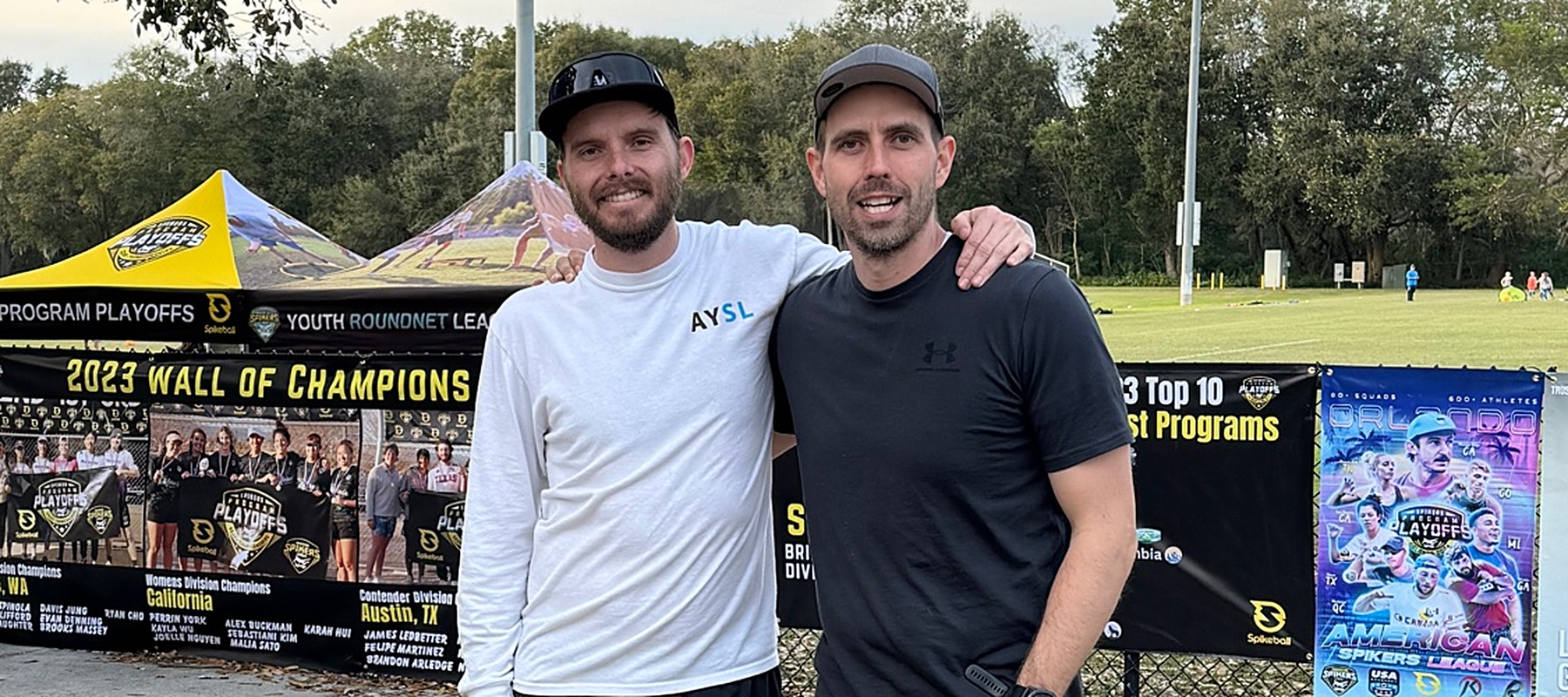
I want to tell you how this started, because the Pro League only makes sense if you know where it came from.
I fell in love with roundnet the way a lot of you did, by accident. A friend came home from a trip and told me about this new game he'd played called Spikeball. A few months later, somebody brought a set to a church event and taught me the gentleman's serve, and that was it. I was hooked. I didn't even own a set. I borrowed sets from people at church until I bought my first standard set, and then a second one. I played with my family every chance I got. Then it was my adult friends, after we put the kids to bed, instead of our usual basketball run, they'd come to my backyard, or the church, or my living room, and we'd play as long as we could see. I pulled the cars around to light up the yard. I put lights on top of the garage. We just wanted more roundnet.
Then one day I was watching ESPN and saw College Roundnet, players like Jacob Payer, and I realized this game had a real competitive scene. I started hunting for tournaments. A guy running events near me pointed me to Utah and to the program Taylor Sanford had built there. I talked my brother-in-law into driving to our first tournament. It snowed six inches that day, and we had the time of our lives.
Here's what I kept coming back to. My weekly basketball game had a hard ceiling: we could only take 12 to 15 guys, and if more showed up, we had to tell people they couldn't come. It felt exclusive, and there was no way to grow it. Roundnet was the opposite. Anybody could show up. So I booked a field at a local park, people started coming, and they started inviting people, and those late-night pickups with friends and family turned into a community before we knew what to call it.
That's around when Kaleb and I met. We both wanted to grow this sport, and Kaleb was all about community. I had just finished coaching my kids' soccer, honestly, it wasn't as exciting as I'd hoped, and I didn't know much about soccer, and I kept thinking: what if kids had a real place in this game I was falling in love with? So we brainstormed, and the idea that came out of it was the American Youth Spikers League.
We built it on a league director model, local leaders running local teams, coaches in place, players able to move in and out. We held a retreat, and leaders from all over Idaho showed up, and we launched. We put together a video, kids in matching jerseys, playing the squad format you mostly see today, and showed it to Spikeball. They believed in it right away. The talks with Sean Boyer, Skyler Boles, and Christina were the start of our partnership with Spikeball, and they've stood behind league directors all over the country ever since. Chris Rüter has been an amazing champion for this sport, and a great friend and ally to everything we've built, the American Youth Spikers League, the American Spikers League, and now the Pro League.
Our very first league director was Dallin James. We called him in for an interview and he bought in on the spot. He's been a believer and a supporter the whole way, and he's still leading today.
The first youth league had teams in Rexburg, Boise, Twin Falls, and Idaho Falls, with Utah teams too. We played a state championship that November, Rexburg won it, and congratulations to them again. Then came the first youth championship: a two-day tournament, teams of seven from all over Idaho and Utah. It was hot, it was crazy, and a Utah team won the whole thing. The next year, Utah won again. The third year, our Idaho Falls Freeze finally beat Boise, and it was awesome. And the best part is that kids who started in that youth league are still playing today.
Coaching those kids, and watching how much fun they were having in the squad championship, we kept asking the same question: wouldn't this be incredible for whole communities? That's where the playoffs came from, first Las Vegas, then Orlando, then Orlando again. Communities competing against communities. Players associating with a place. We made plenty of mistakes along the way, and we still do, but every year we try to get better, listen to our players, and build an experience worthy of this sport.
Kaleb calls the squad format the chess of roundnet, and he's right. It's all strategy, setting your pairs, playing the matchups, trying to make every game as competitive as it can possibly be. The pair score and the net variance are a big part of that. They keep matches honest, and they keep them close. That format has been with us since the beginning, and we've changed very little of it over the years. It just works.
Squads were already part of roundnet. We just built a format that made sense for us, a way to coach the youth we were working with, and it turned out to be something everybody loves to play. Watching it catch on has been one of the most exciting parts of all of this.
The playoffs started in Las Vegas, but Florida won us over, and here's why. The park we use there has been so accommodating to us. We wanted turf, not grass, and they had it. We fell in love with the weather. And because it's Orlando, because of everything people fly there for, flights are affordable, which means more people can actually get there. That matters to us.
Then there are the Airbnbs. Some of the coolest houses in the country, and they're cheap, huge houses with swimming pools, pool tables, movie screens, and arcades. You can play indoor spike in the garage or out on the deck. It's so fun. And every year I get to make the drive from Idaho to Orlando and back with my kids and Kaleb. It's honestly some of the most fun times of the whole year.
All along, we were thinking about the next step: an official league. Not just events, a club system. A club is a place where an owner takes initiative, responsibility, and real ownership of a community, so they're motivated to grow it week after week and year after year. Kaleb and I started calling leaders all over the continent one by one. Those phone calls are still one of my favorite stretches of this whole journey, hearing about their programs, telling them what we were trying to do. We didn't announce it one piece at a time. We wanted to bake the whole cake first: put the ingredients together, get the buy-in, and announce something complete. Once enough clubs across the country were in, we announced it at the 2025 playoffs. The support was incredible. That was the beginning of the Pro League.
We built it to solve two problems.
The first is legitimacy. This is the world's greatest sport, and it deserves structures that treat it that way. We can't say enough about everything USAR has done, what the International Roundnet Federation is building, and what leaders like Jack Scotti built long before I showed up on the scene. An organized league, clubs playing clubs, records that count, championships that mean something, adds to that legitimacy. And let me be clear: this was never meant to replace anything that already exists. College roundnet is incredible, and it's literally the reason I'm here. What we're building complements what's already great.
The second problem is attrition. Players fall in love with this game and then drift away, because there's no road in front of them. So we built the road map. It starts with somebody playing in a backyard at a family barbecue. They find a community that plays all the time. They join a club, to compete, or honestly just to belong, because some of my favorite parts of club life are the social parts: the parties, the barbecues, the road trips, pro players and brand-new players in the same family. And for the ones with the competitive drive, there's a ladder. Minor B to Minor A. Fighting to move from the seven to the one. An open spot on the pro team if you earn it. Your squad pushing from P2 up to P1, and fighting not to drop. Contracts. Free agency, we've gone slow there on purpose, one in and one out, to protect the strength of the clubs, and already players are earning their way into new clubs and being fought over. Records, accomplishments, and championships that attach to a club and to an owner, so the work people put in doesn't disappear. All-Stars. Hall of Famers. Legends, remembered by the club they belonged to.
That's the word I keep coming back to: belonging. Some of my kids' greatest friends have come through this community. Some of our family's greatest memories are traveling to tournaments. I got to earn Premier alongside Jake Martha. I got to watch my son Jack earn Premier at 14 years old. I'm 43 now, and the thing that got me then is still the coolest thing about this sport: anybody can pick it up, anywhere, with just a few people, and the ceiling is as high as you want to chase.
We're in our second year now, and the league is turning a corner in a massive way. The championship itself, the playoffs we run every year, is in its fifth year. You've seen the stories building: the overtime comeback, Montreal over Livonia, then the back-to-back Montreal–Livonia finals. Some of the best highlights I've ever seen came on the first night of last year's playoffs. This year at the playoffs we're introducing Slot Choice, and it's going to be incredible. The new tools are arriving with it, live streams, live scoreboards your family and friends can follow from home, your stats and your PRO Score in the new mobile app, your match history and how you're improving, all in one place. And we have some surprises in store that we haven't announced yet.
And it all comes back to where we started: the youth. We started with the youth, and we intend to focus there even more. In year three you'll see youth travel teams return, and a middle school league is in the works right now. Picture every club running a youth program, hundreds of kids with a place to belong, traveling to play, maybe getting picked up by a college team one day, maybe playing their way onto a pro team. That's where this road leads. Our job is to keep paving it.
Our dream is that roundnet becomes a kid's primary sport, the one they choose first. We want them to have the thing we wish we'd had when we were in middle school and high school. And we believe they'll fall in love with it for the same reasons we did: the playing time, how easy it is to pick up, how affordable it is, and how accessible it is. Anybody can play this game, anywhere.
And who knows how far it can go. The International Roundnet Federation, the IRF, runs the world championship, and they're the ones working to get roundnet into the Olympics. When the IRF succeeds, and hopefully we can help them get there, our kids, and someday our grandkids, could be roundnet Olympians. That's a future worth building toward.
As the spectators and sponsors grow, and they are growing, there's more to travel on, bigger seasons, more support for the youth programs, and more that flows back to the clubs: sponsorships, merch, concessions. That will keep growing as the league grows. If the clubs succeed, the players succeed. That's the whole design.
To the owners: thank you. You've put your time, your money, and your effort into growing a club and a community you believe in. Kaleb and I hear the stories from you, players who hadn't played in years showing up again, brand-new players falling in love with the sport on their first night. You're using this as a recruiting tool and a retention tool, because it works. We're grateful for every one of you, and as this grows, we want you and your players to benefit right along with it.
A special thanks to Andrew Gassaway and Skyler Boles at Spikeball. They're some of our favorite people to work with in this sport, and they believed in what we were trying to accomplish, really believed in it. That meant everything when we were just getting started.
Big thanks to Ben Dantovitz as well, for all he's done at USAR to get this sport where it is today.
To the leaders who built roundnet long before us, and to the tournament directors and the college programs we get to work alongside: thank you. We want to work with all of you. We believe this can do some good, and we've seen it do good already.
To the college club presidents, past, present, and future, thank you. You're keeping this sport alive and growing on campuses everywhere, and so much of what comes next runs through you.
And thank you to everyone who spends countless hours on the parts of this sport most people never see, the content, the training, the clinics, all of it. We know those hours are out there, and the sport doesn't grow without them.
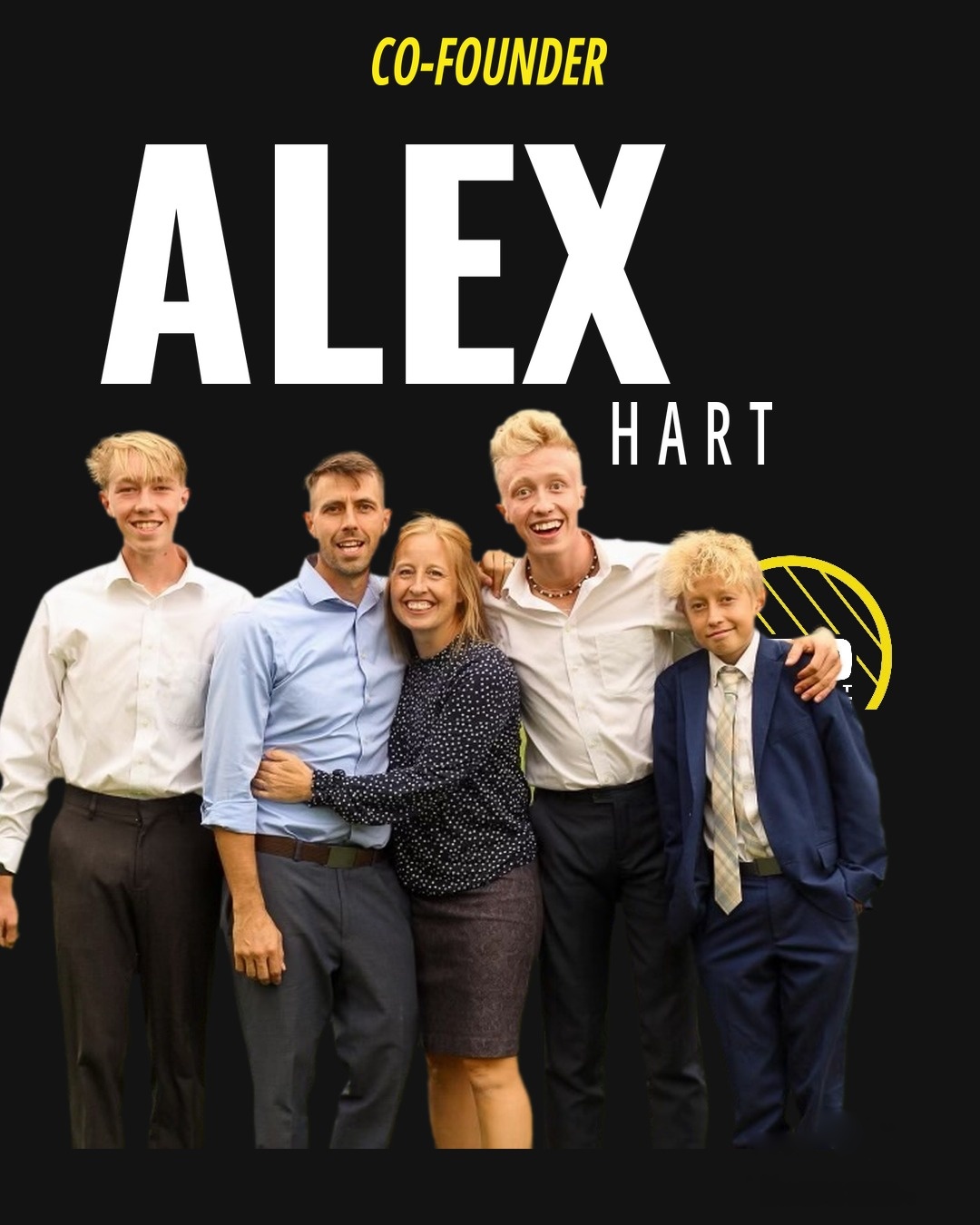
And to our families, Nicol, Kaleb's wife, and Elise, mine, and our kids, thank you for the giant support behind us as we've tried to build something special.
There are plenty of other people Kaleb and I could name, people who have been influential in our success and part of our favorite memories along the way. In trying to keep this letter shorter rather than longer, we'll leave it here: know that we remember you, we appreciate you, and you are an important part of all of this that we're trying to grow together.
The Pro League isn't perfect. It's not the end-all model. It's the model we understood, built the best way we knew how, to help grow the sport in our own little way. Our hope is the simple one we started with: that somebody, somewhere, picks up this game the way I did, borrows a set, plays under the lights a little too late, falls in love with it the way Kaleb and I did, and finds a road in front of them that doesn't dead-end. A community. A club. A family.
Thank you, thank you, thank you.
Alex
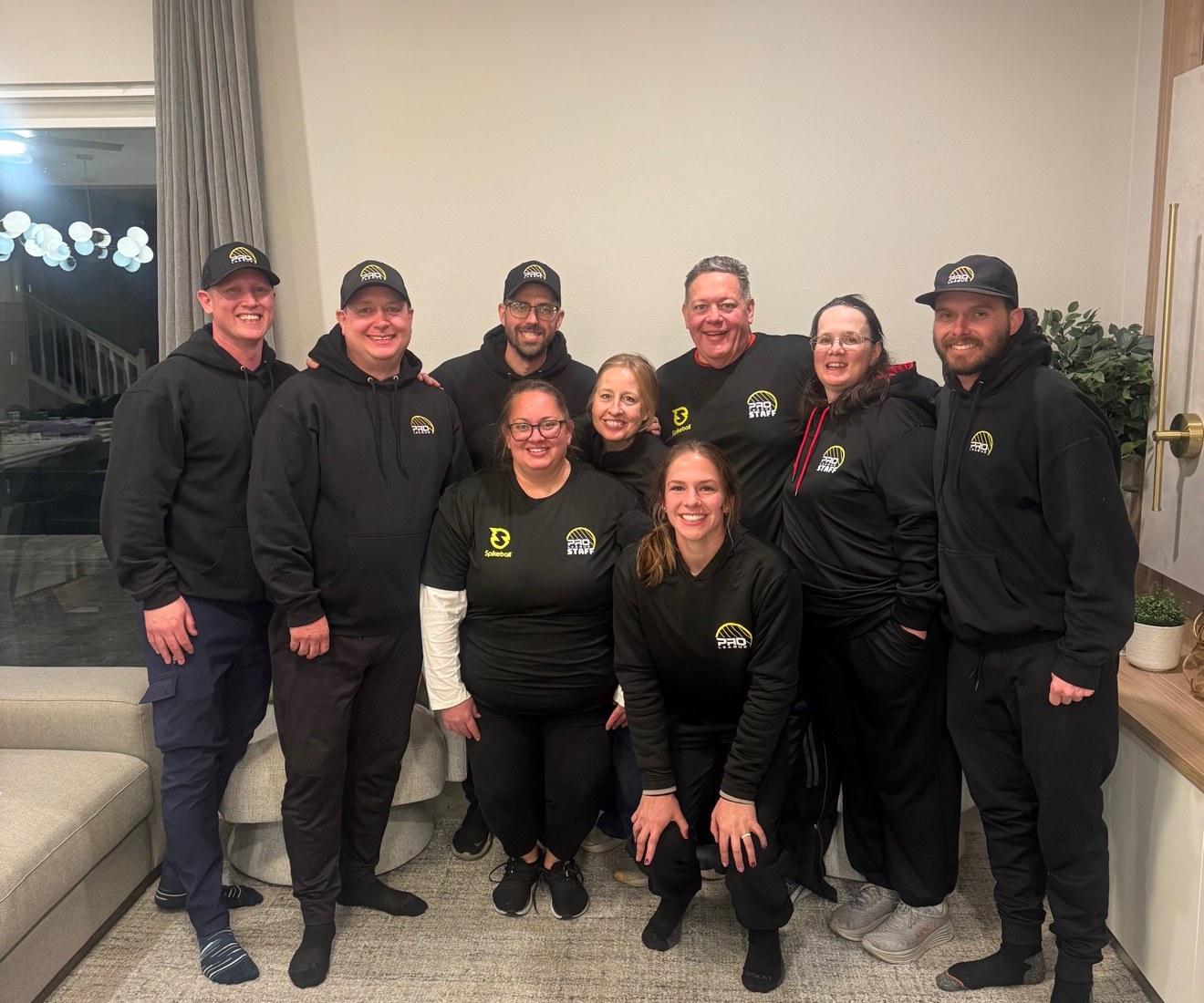
None of this happens without the people who make it possible. To the amazing team that helps us every year, Jeremy Klein, Eric Schreibeis, Kevin and Heather Price, Chris Ruder, and our wives, who carry more of this league than anyone sees, thank you. Every year we get spoiled with new people who come and help, and we’re grateful for every one of you.
The key questions for this page. The full league FAQ, all 287 answers, lives on one page.
The PRO Roundnet League is a national club-based roundnet league featuring P1, P2, M1, M2, and Women's divisions. Clubs compete throughout the season for standings, playoff qualification, promotion, relegation, and championships. The league is built to create long-term club identity, structured competition, regional growth, and advancement pathways from beginner levels to the highest level of play. The season includes three official matchdays followed by championship playoffs in Orlando, Florida.
The season includes three primary matchdays:
League standings use a group point system:
Seeding runs off the Power Score, which weighs a squad’s group points per match together with the strength of its results, beating strong squads counts for more than running up wins over weak ones. The Power Score sets the seeding and the Slot Choice order for the Championship and Promotion Brackets, and helps decide their final spots from the Play-In Schedule. The first Power Scores publish November 9.
Your PRO Score is a career rating from 1 to 10 that follows you from event to event. It's built from every counted net you've played in the league, and it looks at your game from several angles:
One guardrail keeps it honest. A small number of nets can't inflate a score: until you've built a real body of work, your score is pulled toward the middle of the pack. Past that, there is no ceiling and no shortcut: the top of the ladder sits wherever the best careers in the league take it, and the biggest wins of a career, the games your profile keeps as your career-defining games, are the ones that move it most.
One number, your whole career, that's the PRO Score. Read it as a résumé, not a prediction: it records what your career has proven, and it grows season over season. Its single-match cousin is PER, which grades one match at a time using the same ideas.
PER, Player Efficiency Rating, is your form this season: one grade for the whole season, on a scale of 1 to 99 where 50 is the average for your competition, the field you actually play against. A 60 in Minor and a 60 in P1 are both strong seasons, graded against different fields.
Every match starts at 50, league average. Finish above 50 and the day went well: you won your nets, and how much you won by, how many points you scored, and how strong the pair across the net was all push the number up toward 99. Finish below 50 and the day went the other way, with the same factors pulling you down toward 1.
Four things grade every match:
One matchday gets its own number: your Matchday Grade is the same grading applied to a single matchday, with nothing blended in, so a great day shows in full. Your season PER blends every matchday together, and it treats a small sample honestly: a PER built on very few nets is pulled toward the average until the body of work behind it is real. Partners share the grade, too: every net grades the pair, so your number reflects the partners you played those nets with.
PER is computed fresh for every match, then rolls up into a Matchday Grade for the day and a PER for the season, so a great month shows up right away. Only official match nets that were fully recorded count: pickup games, partial records, and forfeits never move it.
Because the two numbers do different jobs. A Matchday Grade grades one day on its own: play great that day and the grade says so, in full. Your season PER blends every matchday together, and it pulls a small sample toward the average, so a season built on a modest number of nets lands closer to 50 than the days that made it.
Say your Matchday Grades are 72 and 84, on a light schedule: the blend can print as a season PER in the 60s, below both days. Nothing was taken away; the season number is simply asking for more proof, and stacking more nets at that level pulls the PER up toward the days that built it.
The same blending is why one huge day on a handful of nets does not print at face value: a grade of 80 over 4 nets can land as a PER in the 50s, while the same 80 across 40 nets prints around 70. Volume is what turns a great day into a great season number.
Say your pair wins a net 15-8, twice in the same day.
That is the design working exactly as intended. The pair across the net sets the bar, so their PRO Scores decide how high your grade can reach. Beating up on a weaker field tops out in the high 80s; to see the 90s, you have to beat the best pairs in the league, and beat them well. Two identical scorelines, two very different tests, two honest grades.
PER grades every match on the same four things, so the path up is the play itself:
And the mirror image: the same four things pull a below-average day down, so the fastest fix is usually the simplest one. Win the next net.
PRO Score is career proof, so it rewards what a career is made of: strong competition, repeated over time.
One quiet season does not erase a strong career, and one hot month cannot create one. Read the number as a résumé, not a prediction of your next match. That is the point: when a PRO Score says a player is proven, it is because they have proven it, over and over.
Because the two numbers answer different questions. PER is current form: it is graded fresh for every match, so one great weekend moves it right away. PRO Score is career proof: it is built from every counted net you have ever played in the league, so the same weekend is one chapter in a long book, and the number moves like it.
Watch PER for how you are playing now, and PRO Score for what your career has proven.
For the Pro ballot, a player needs a Pro-division PER of 40 or better and at least 6 counted Pro nets. Only P1 and P2 nets count toward the 6, and the PER that counts is the Pro-division line, not a combined one. Every player who clears the bar is on the ballot, whether they attended both matchdays or just one, and their card shows which. Playing any division counts toward the matchdays you attended, and coaching a matchday counts as attending it.
The Women's ballot asks for at least one match this season, in any division, with no PER minimum. Every player in a club is on that club's MVP ballot. The full ballot, with the voting rules, lives on the All-Star page.
Season leaderboards ask for a body of work: a player shows on them once they have played in at least two of the league's last three events. For 2026 those events are the January Playoffs, Matchday 1 and Matchday 2, so last year's playoffs plus one matchday this season counts. One matchday on its own does not. Under that bar a player's numbers still count: they live on the player's card and profile, and a season PER built on very few nets is pulled toward the average while the sample is small. Once the events stack up, the player takes their place on the boards and the PER stands on its own.
Divisions create balanced competition at every skill level while providing a clear pathway for advancement. The structure helps: